
Fold-Away Access Step for Automated Equipment
Client Overview
A production facility was using fifteen individual step stools to give operators access to a piece of automated equipment on the floor. The stools were loose, they drifted out of place, and they had no way to be secured to the machine. The customer needed a permanent step at each unit that stayed attached, held its position while in use, and folded out of the way when the machine was running.
Challenges & Requirements
- Fifteen Repeat Units: the solution had to be simple and repeatable enough to build and finish fifteen times without ballooning cost.
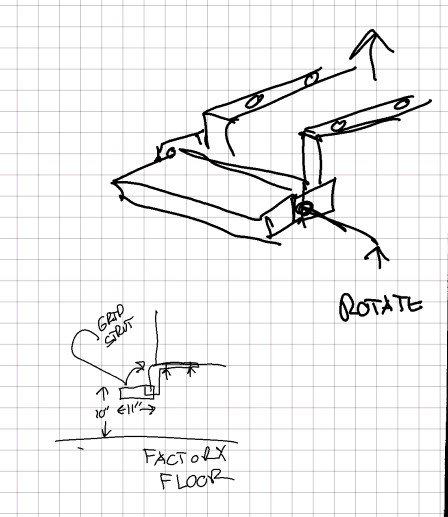
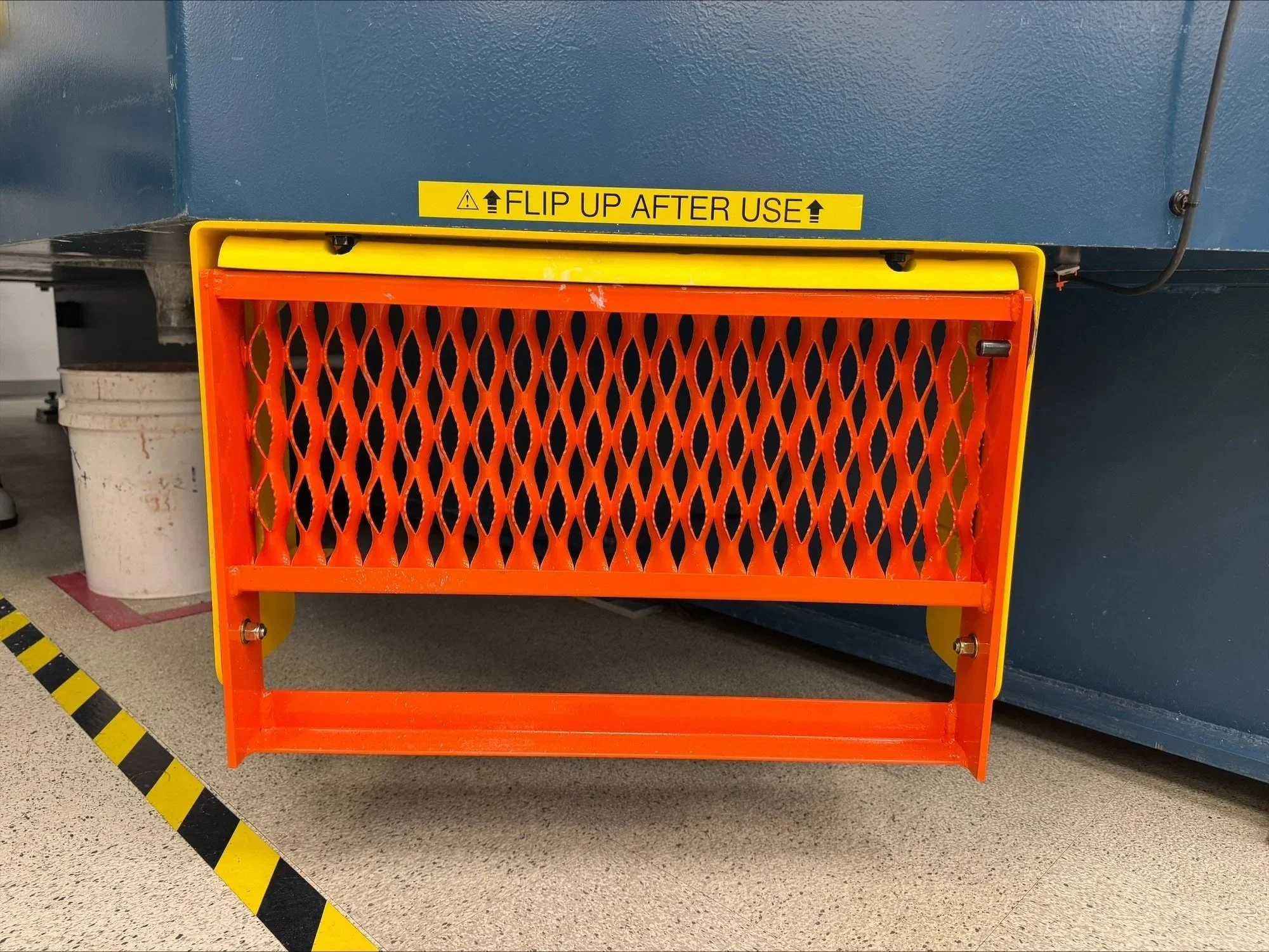
- Fixed Envelope: the step had to fold back flush under the equipment when not in use, clearing the same 11" x 10" footprint sketched on the first call.
- Cost Discipline: the customer flagged early that a simpler, one-piece welded step could save money over a folding design, and asked us to weigh that against the fold-back requirement.
- Durability: the tread needed to hold up to daily foot traffic and take a beating from dropped tools without losing footing.
Step 1: Initial Planning and Design
The request came in as a phone call and a single reference photo of the existing step stools in place. Our design engineer sketched the mechanism live on that first call: a step assembly on a rotating hinge, mounted to the underside of the machine and secured in its stored position by a spring-loaded pin, with GRIP STRUT grating specified for the tread from the first pass. The sketch fixed the two dimensions that mattered most: an 11" step depth set 10" off the factory floor.
A follow-up note from the customer sharpened the design further: if there was no material above the top step, the whole assembly could be built as a single welded piece instead of a folding one, cutting fabrication cost without giving up the fold-back function.
Step 2: Design Development
We carried the concept through three design sheets before locking the final version.
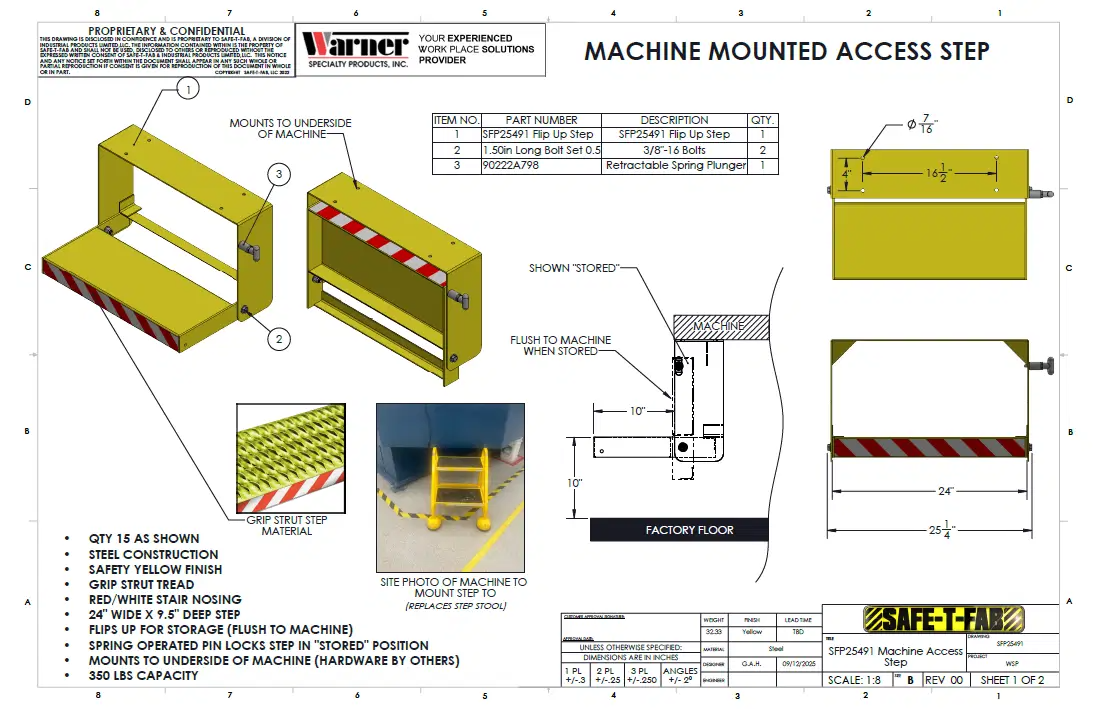
Design Sheet — Manual Concept (see image above/below): a hand-operated flip step welded from formed steel, grip strut tread, held in its stored position by a retractable spring plunger. Simple, low cost, no power required.
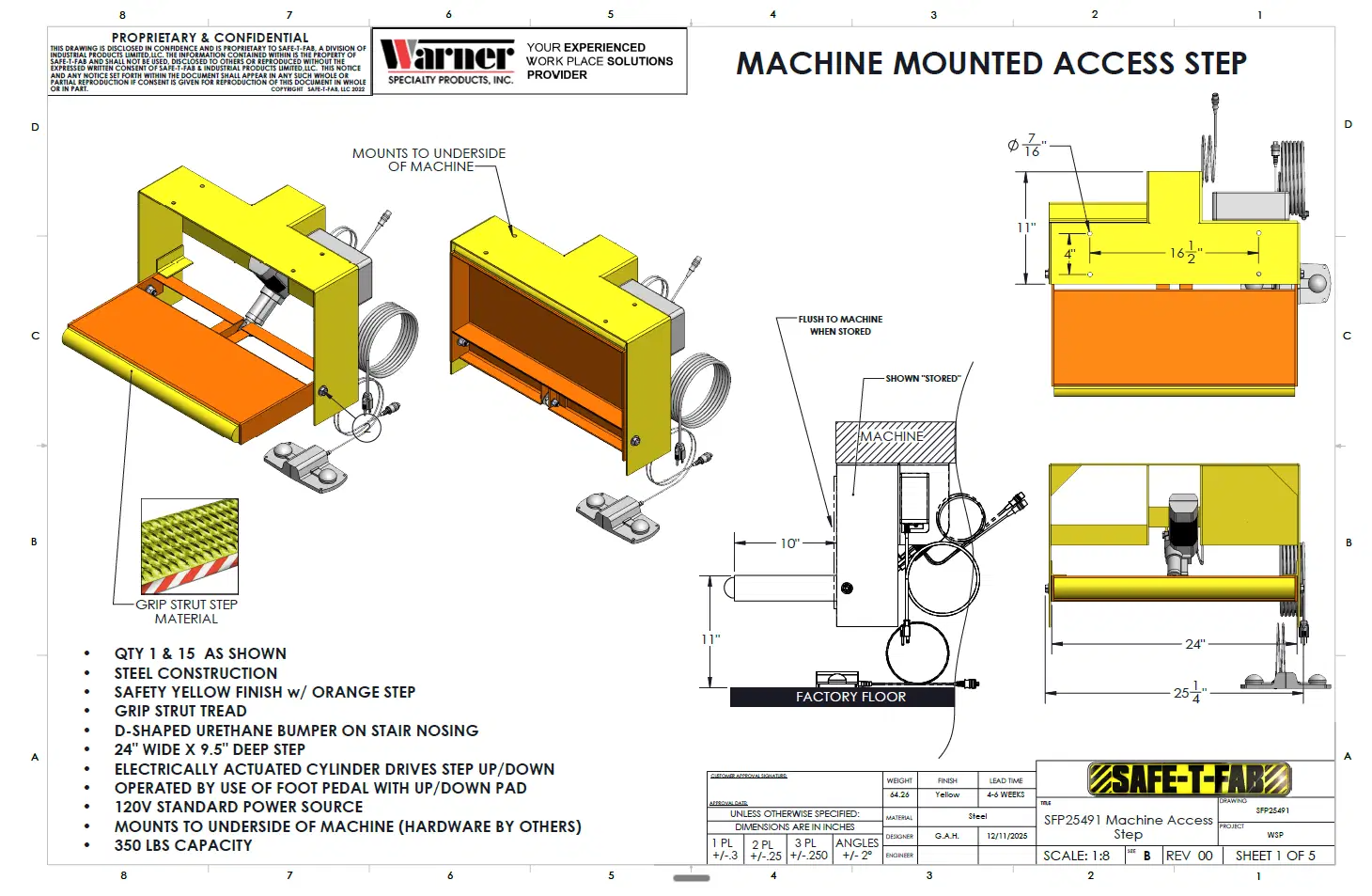
Design Sheet 01 — Full Electric Deploy: a second pass drove the step up and down with an electrically actuated cylinder, controlled by a foot pedal on 120V standard power. It solved the same problem with less operator effort, at a meaningfully higher build cost per unit across fifteen units and a 4 to 6 week lead time.
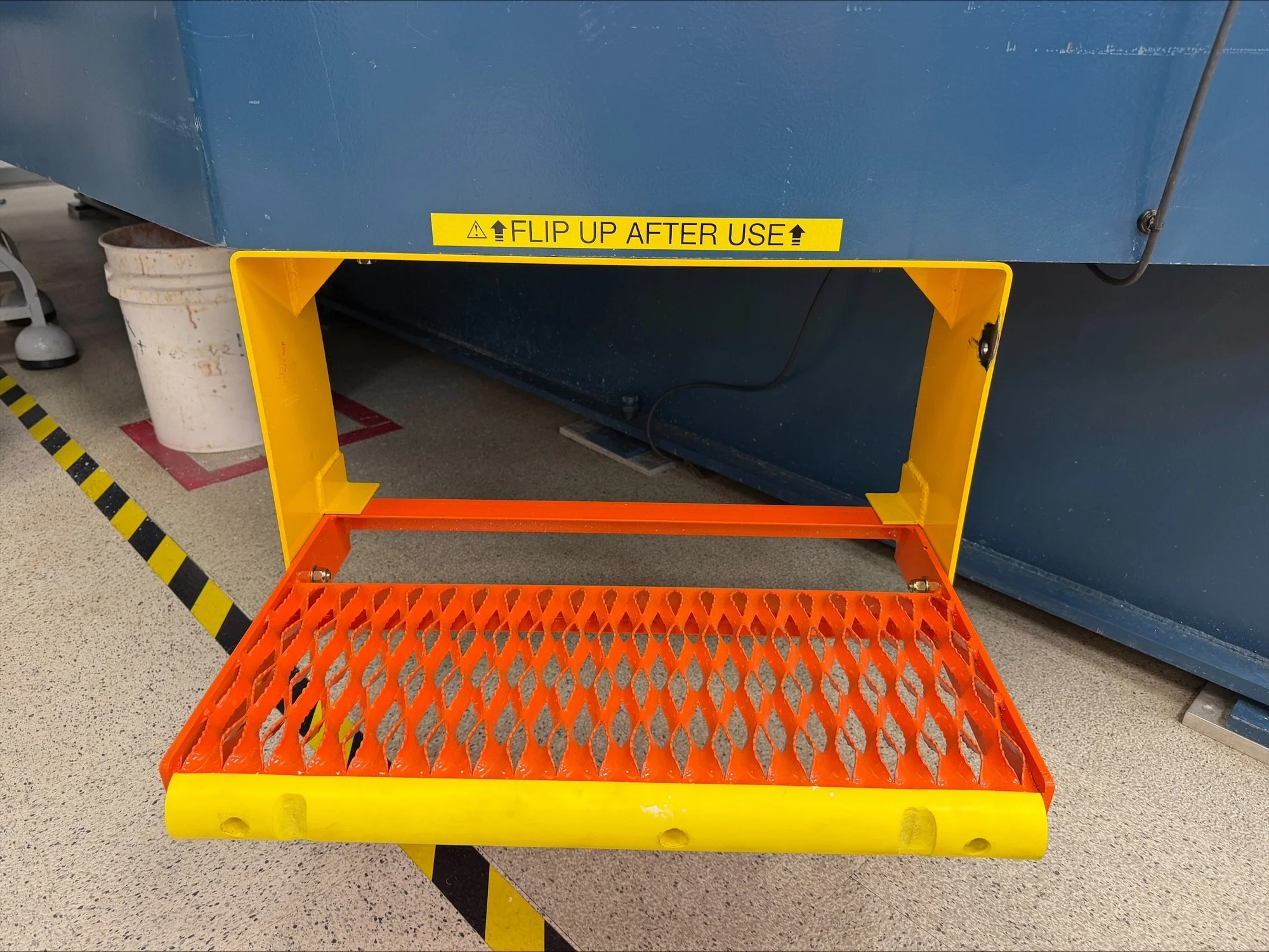
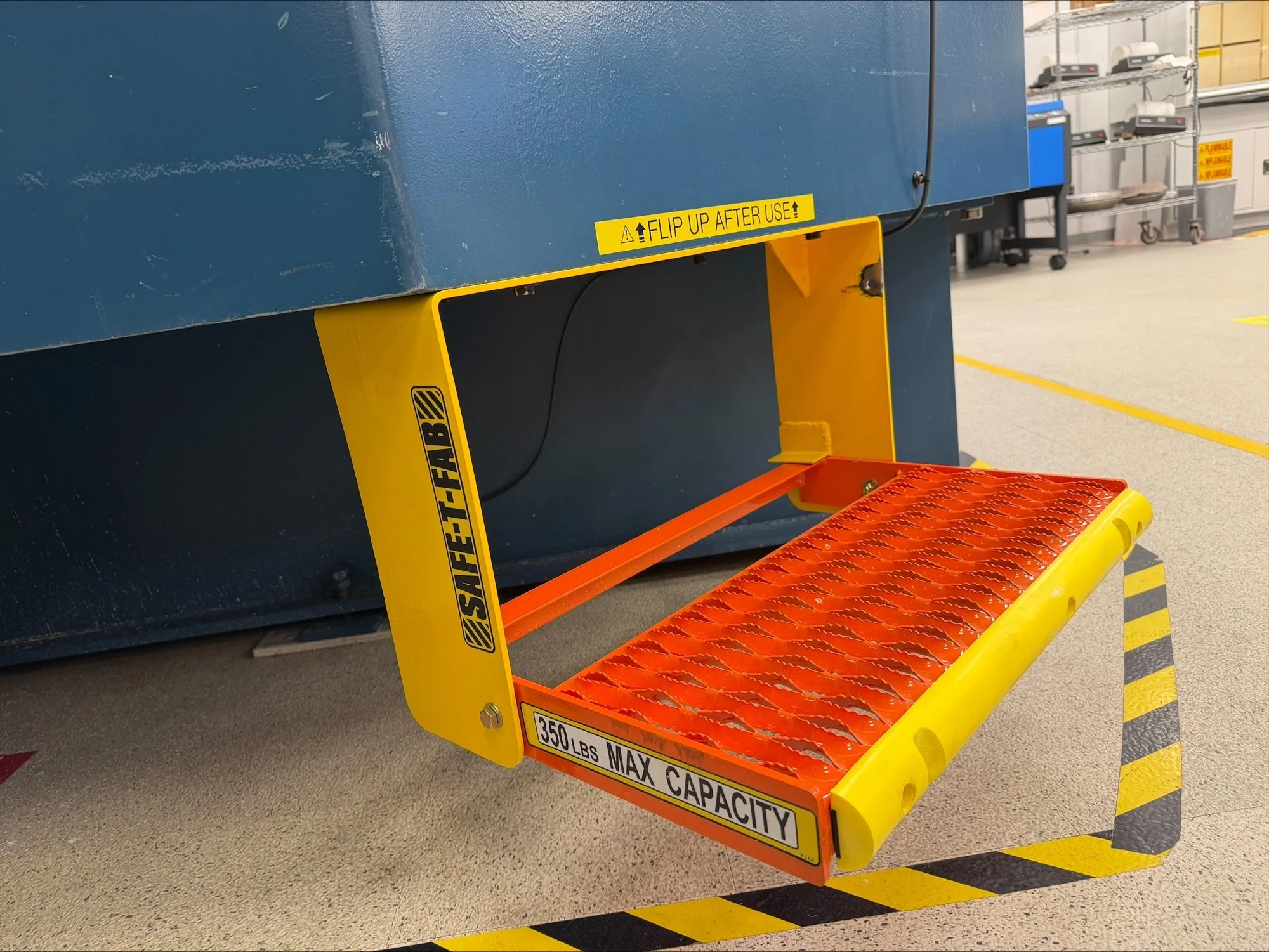
Design Sheet 02 — Final: back to a manual design, refined with a spring-loaded ball detent to lock the stored position, a D-shaped urethane bumper on the front nosing, and a rubber washer to control the step's lowering speed. No motor, no controller, no power run to the machine, and priced to make sense across the full quantity.
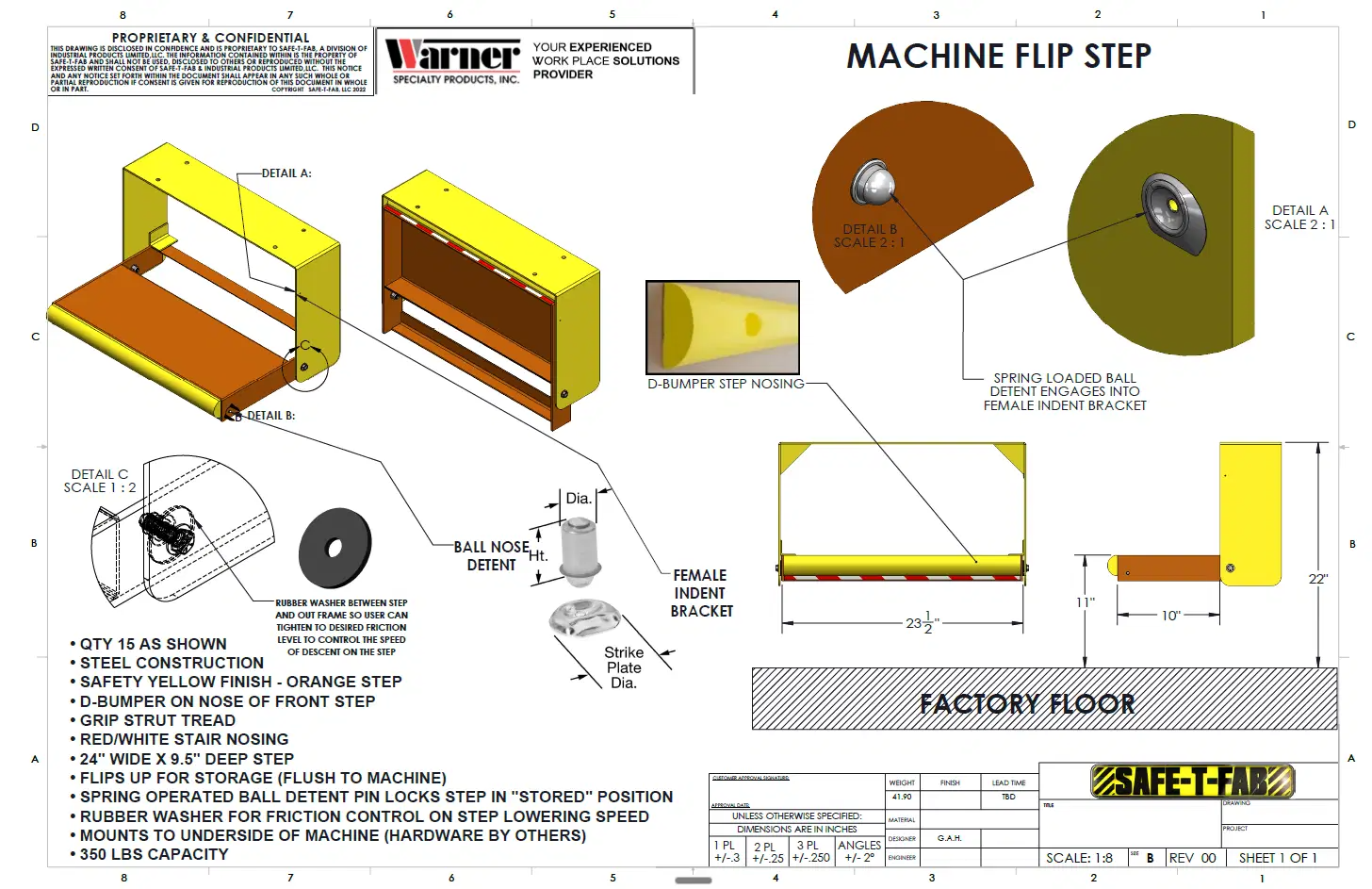
Once the customer signed off, our engineers issued final production drawings for the shop, with full dimensions, weld callouts, and material specs ready for the laser, the press brake, and the welding cell.
Step 3: Prototype
Before committing to a production run of fifteen, we built and cycled a working prototype: rotate it up under the machine, flip it down, load it, fold it back. The final design carries a 350 LBS max capacity per step, with the rating stamped directly onto the tread.
Step 4: Fabrication, Shipping & Installation
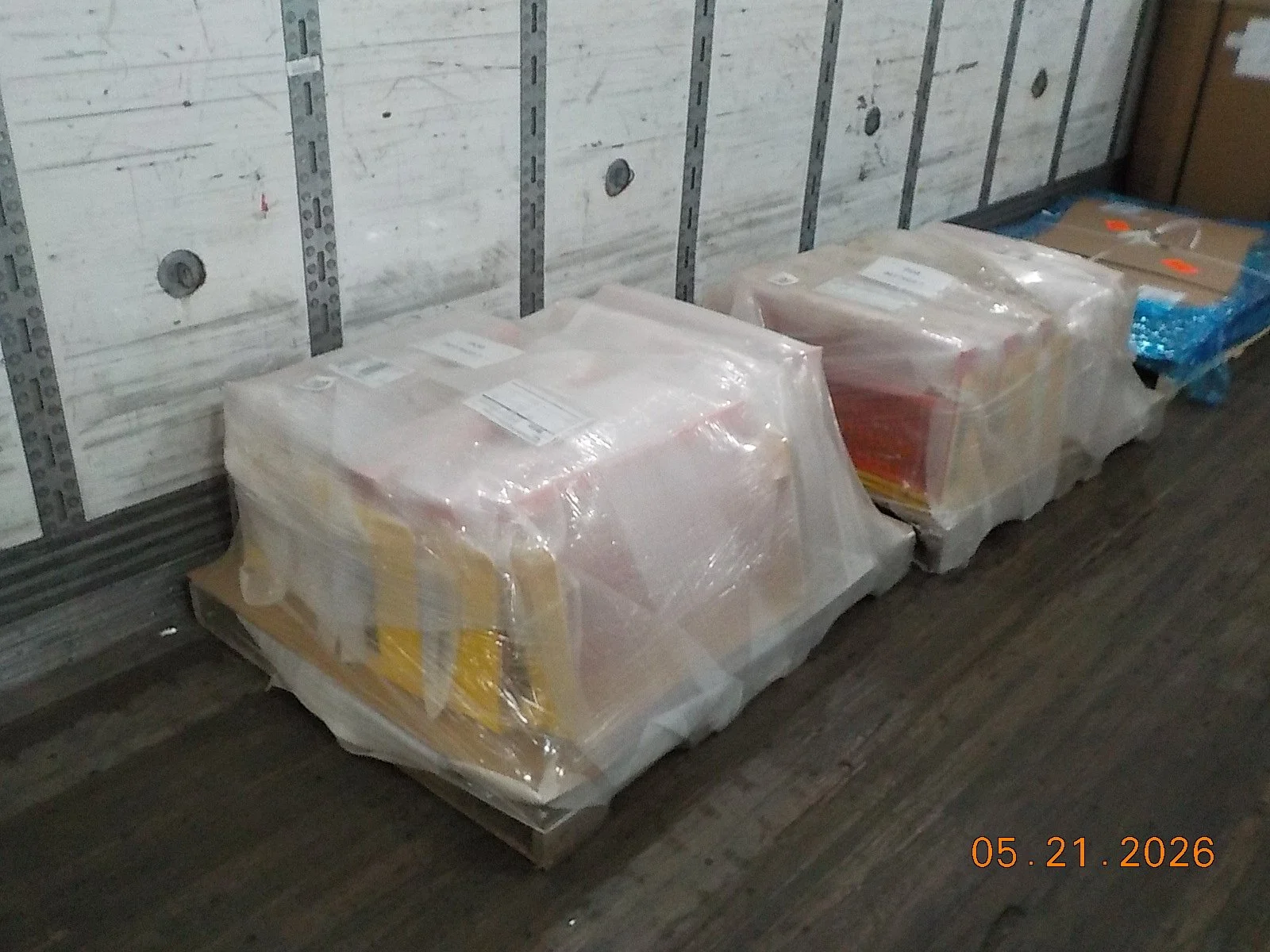
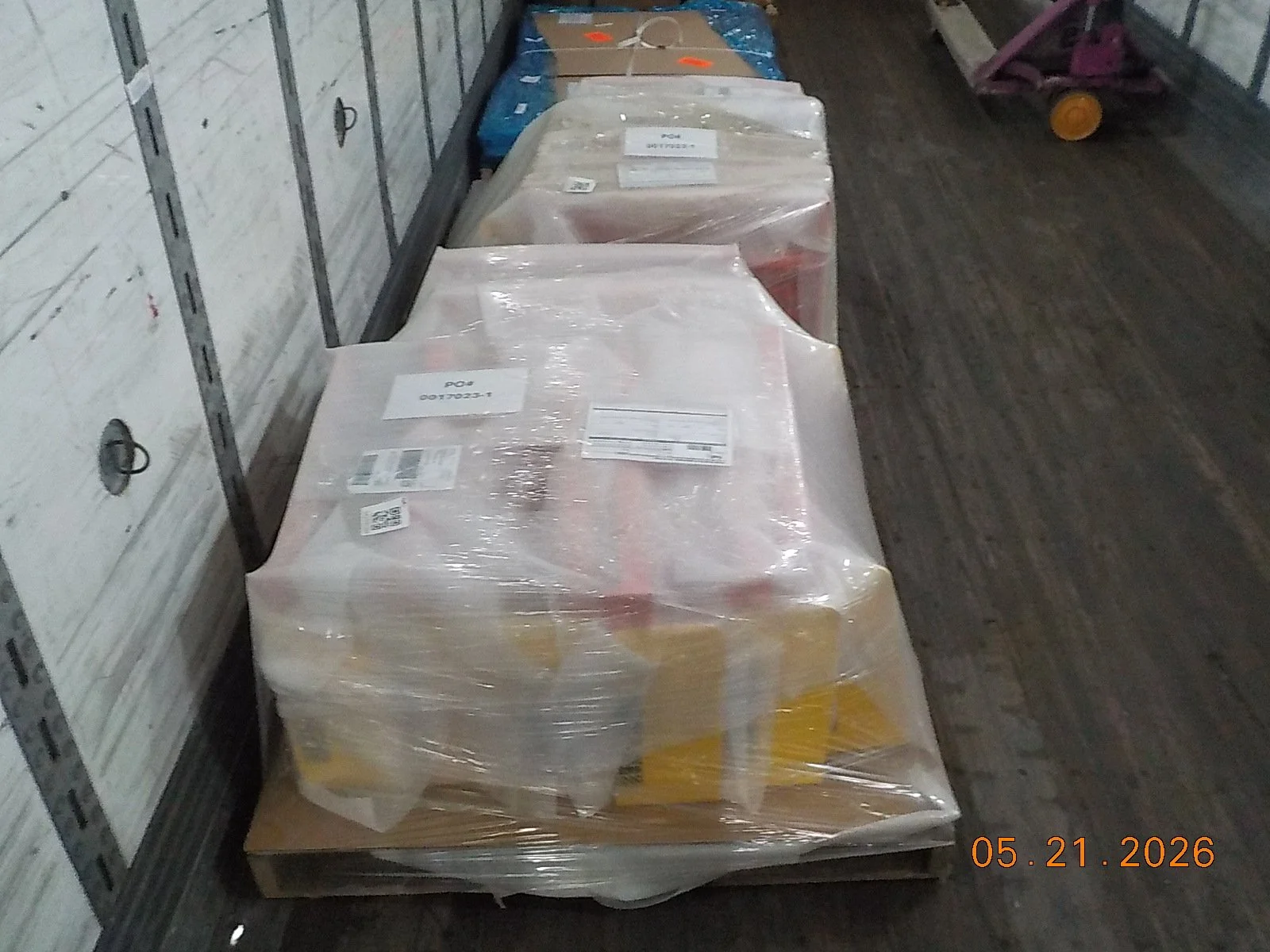
All fifteen units were welded and powder-coated in-house, then palletized and shipped as a single load. A printed reminder on each unit, FLIP UP AFTER USE, reinforces the habit that keeps the floor clear once the steps are installed — the same kind of machine access discipline we build into every custom access point.
Completion and Handover Summary
Fifteen loose step stools became fifteen fixed, welded steps, permanently attached to the equipment they serve. Each one folds flush out of the way when the machine is running and flips down in seconds when someone needs to climb up. Nothing to trip over when they're not in use, nothing to hunt for when they are.
Related Resources
- Industrial Maintenance Access — getting people safely to the equipment that needs service.
- Platform Design & Engineering — load ratings, material selection, and how a custom design gets from a photo to a finished install.
- OSHA & Compliance — walking-working surface rules and stair and access criteria under 29 CFR 1910 Subpart D.
- How To Get Started — what to send us, how quoting works, and what happens between the purchase order and the truck showing up.
Key Takeaways
- Start with the sketch: pinning the mechanism and the critical dimensions on the first call kept every later design sheet grounded in the real constraint.
- Cost drives design as much as function: weighing a manual step against a fully electric one across fifteen units led back to the simpler, more affordable design. See our notes on platform design & engineering for how we weigh those tradeoffs generally.
- Prototype before you commit: cycling a working unit before cutting fifteen caught fit and function issues while they were still cheap to fix.