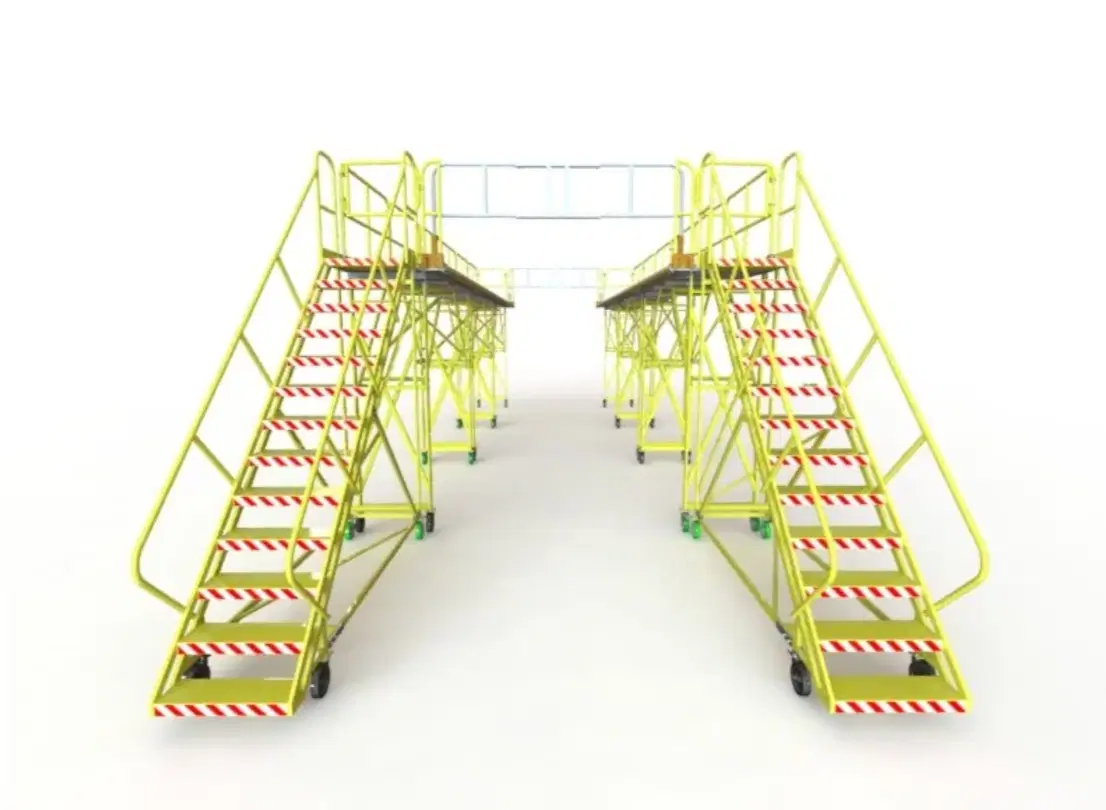
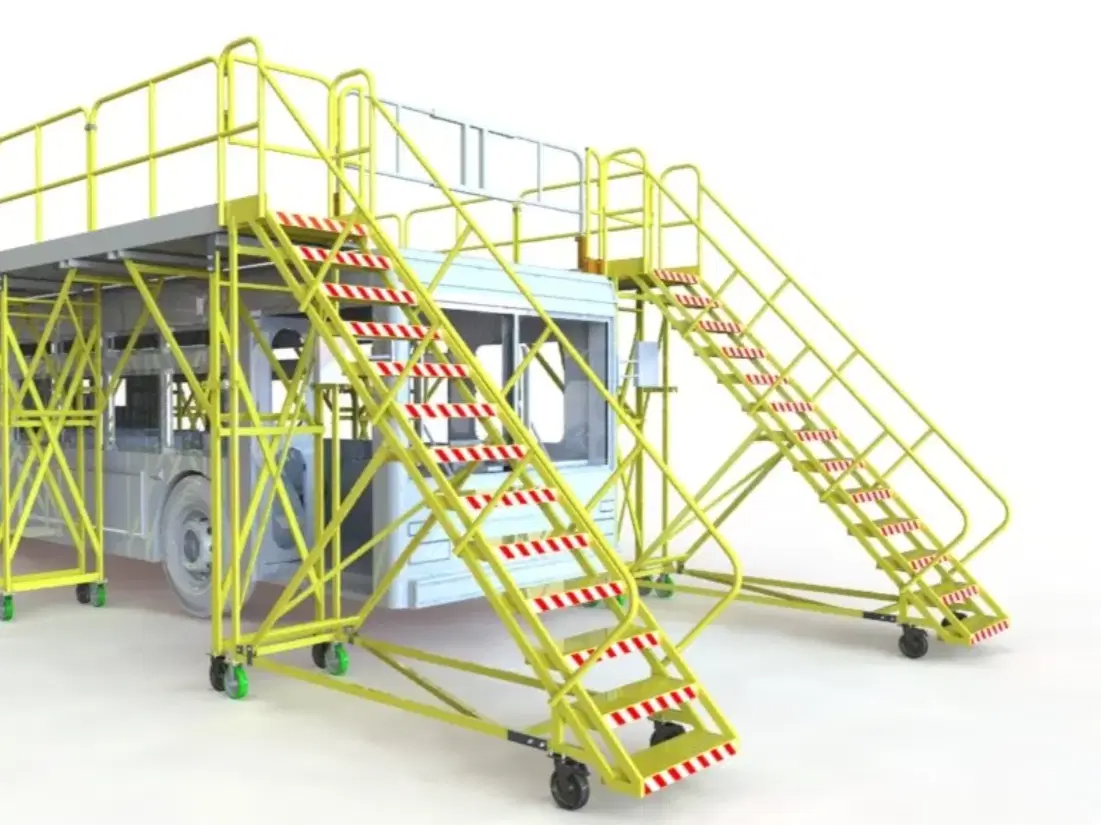
Vari-Safe Electric Bus Access Platform
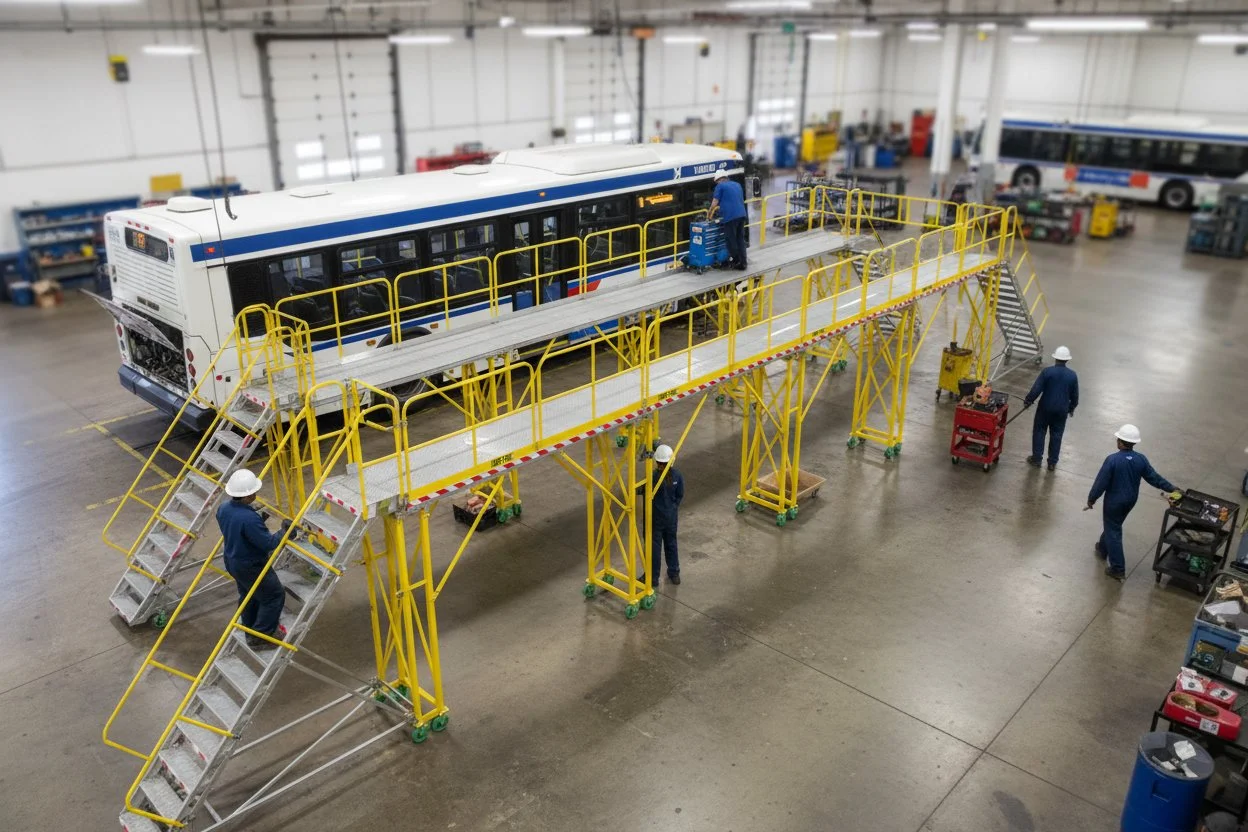
Our mobile access platform is built for electric bus rooftop maintenance. Battery packs and roof-mounted HVAC put your technicians ten feet in the air, and our height-adjustable cross-railings clear that rooftop equipment while 42 inch guardrails give full-perimeter access with no harness required. The same system serves school buses, municipal buses, and hybrid buses, so one platform covers a mixed fleet through the entire transition to electric.
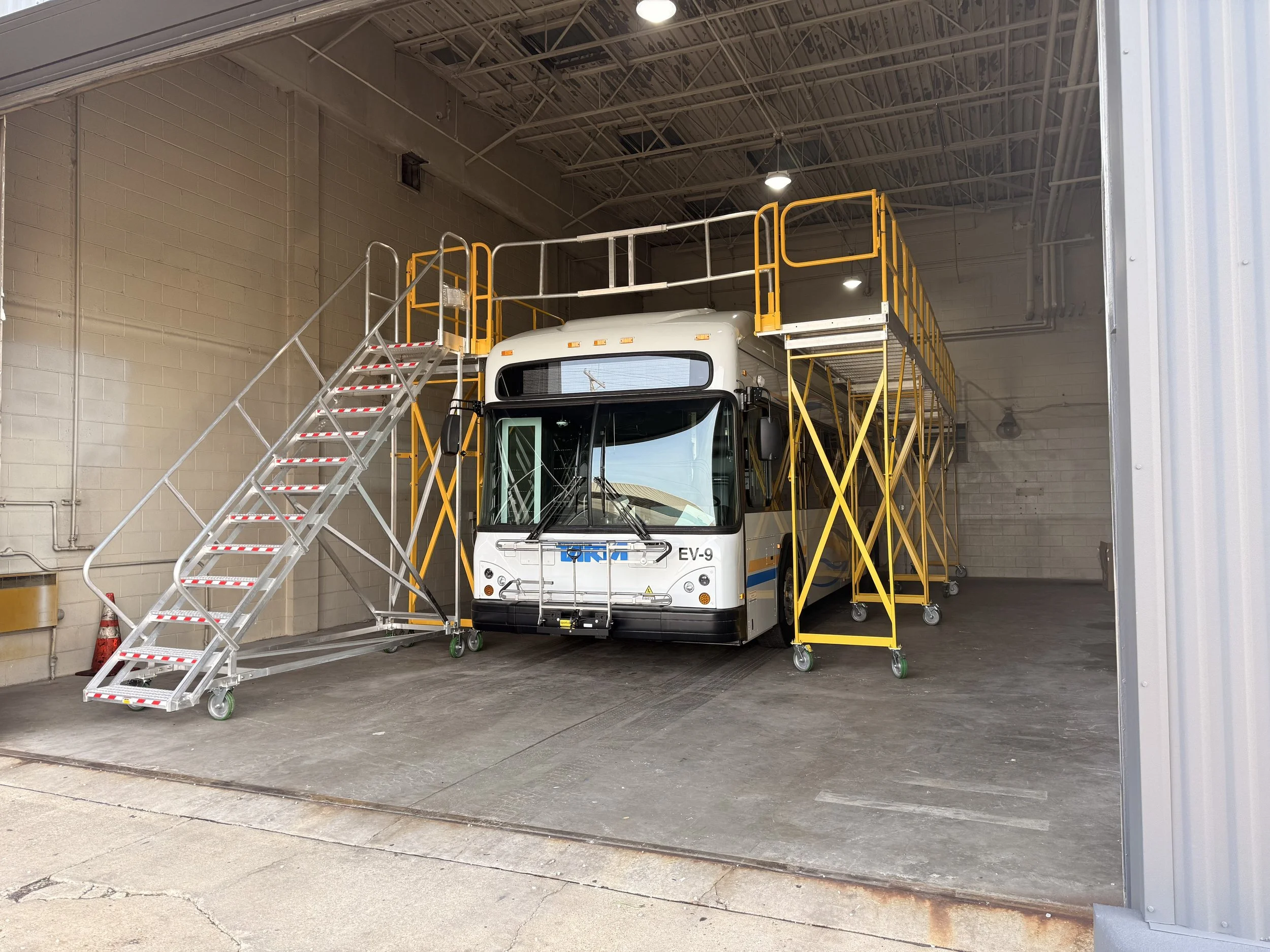
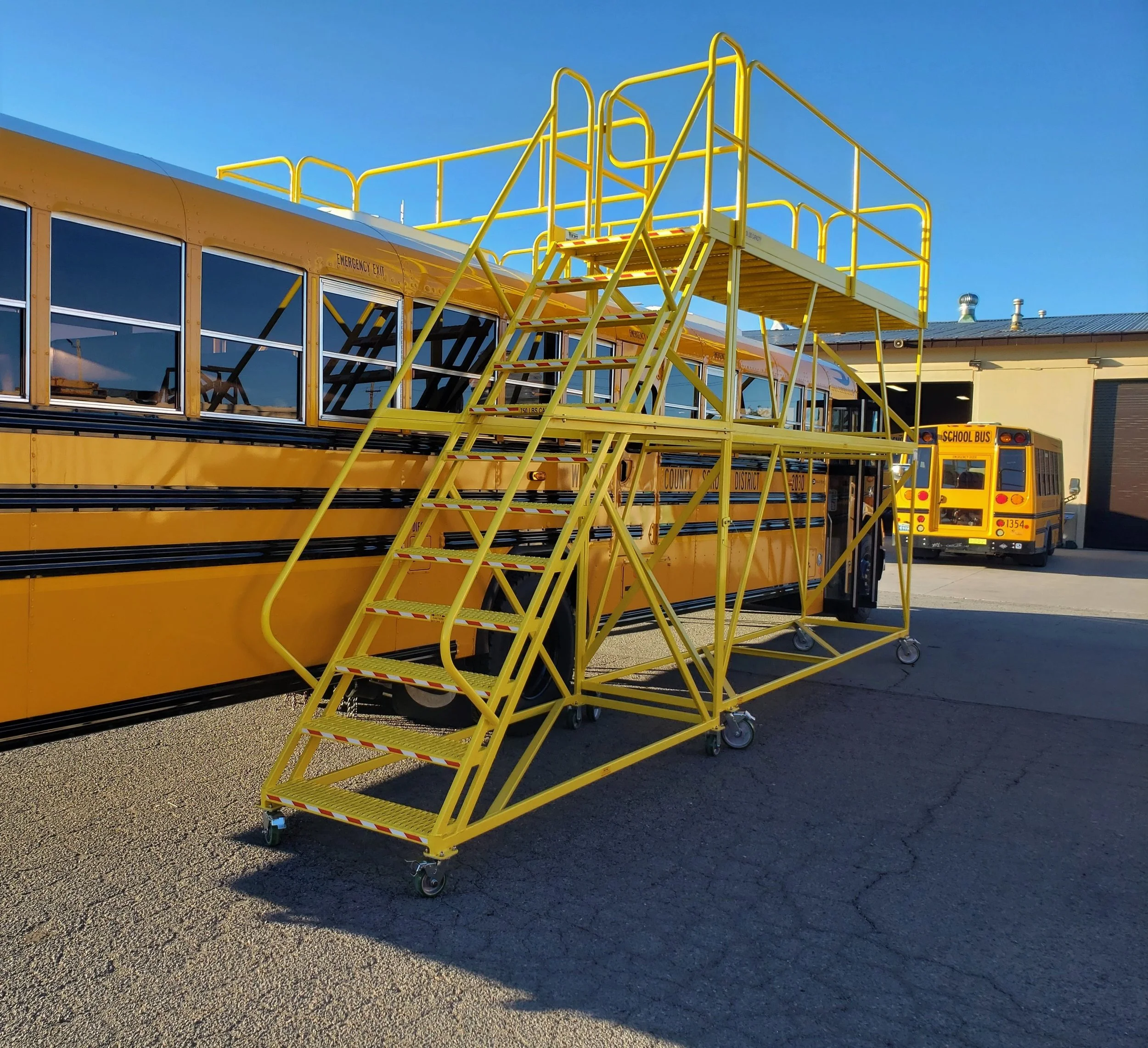
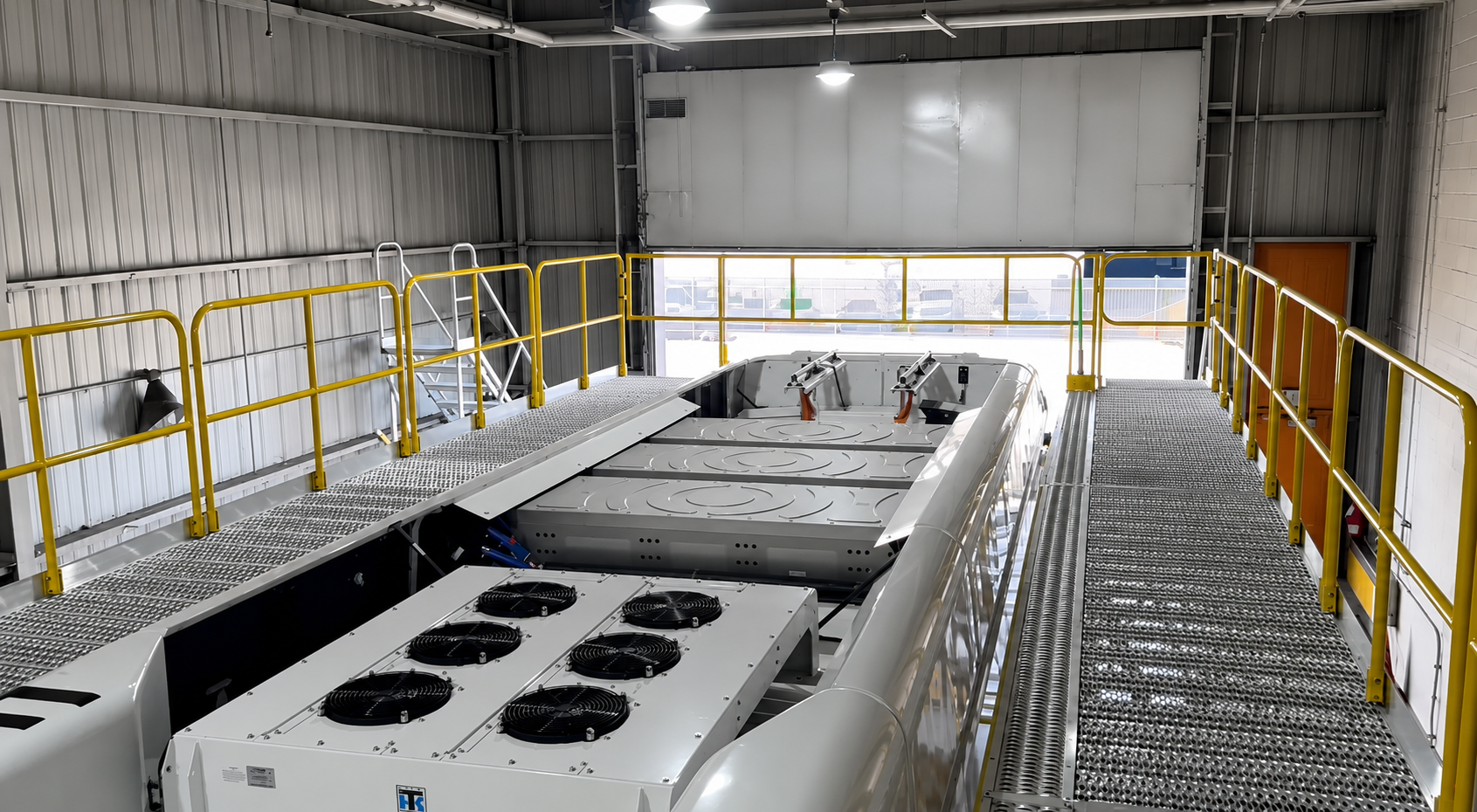
Introduction video to our Vari-Safe Bus Platform System
Your fleet changed. Your access equipment did not.
Most maintenance shops were built around a diesel bus. The work that mattered happened underneath the vehicle, and the shop was laid out for it. Pits, lifts, ground level bays.
Electrification moved the work to the roof. Battery packs, high voltage disconnects, thermal management, and roof mounted HVAC all sit on top of a vehicle that was never meant to be walked on. Shops adapt with what they have. Step ladders. Rolling stairs pushed against the side. Harness systems tied to whatever overhead steel is available. Each one gets a technician partway there and none of them give safe access to the whole roof.
That is the gap the Vari-Safe Electric Bus Access Platform was built to close.
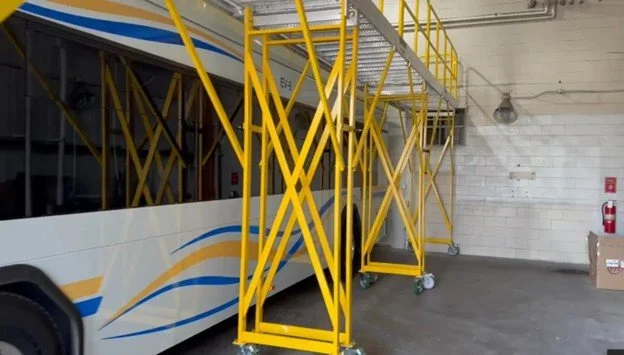
Adjustable cross-railings clear the battery packs
This is the detail that matters most on an electric bus, and it is where most access equipment falls down.
The standard deck height is 120 inches, which puts the walking surface at the right level for roof work on the vast majority of transit and school buses. The cross-railings that span the vehicle sit above deck height, and they are height adjustable. That does two things.
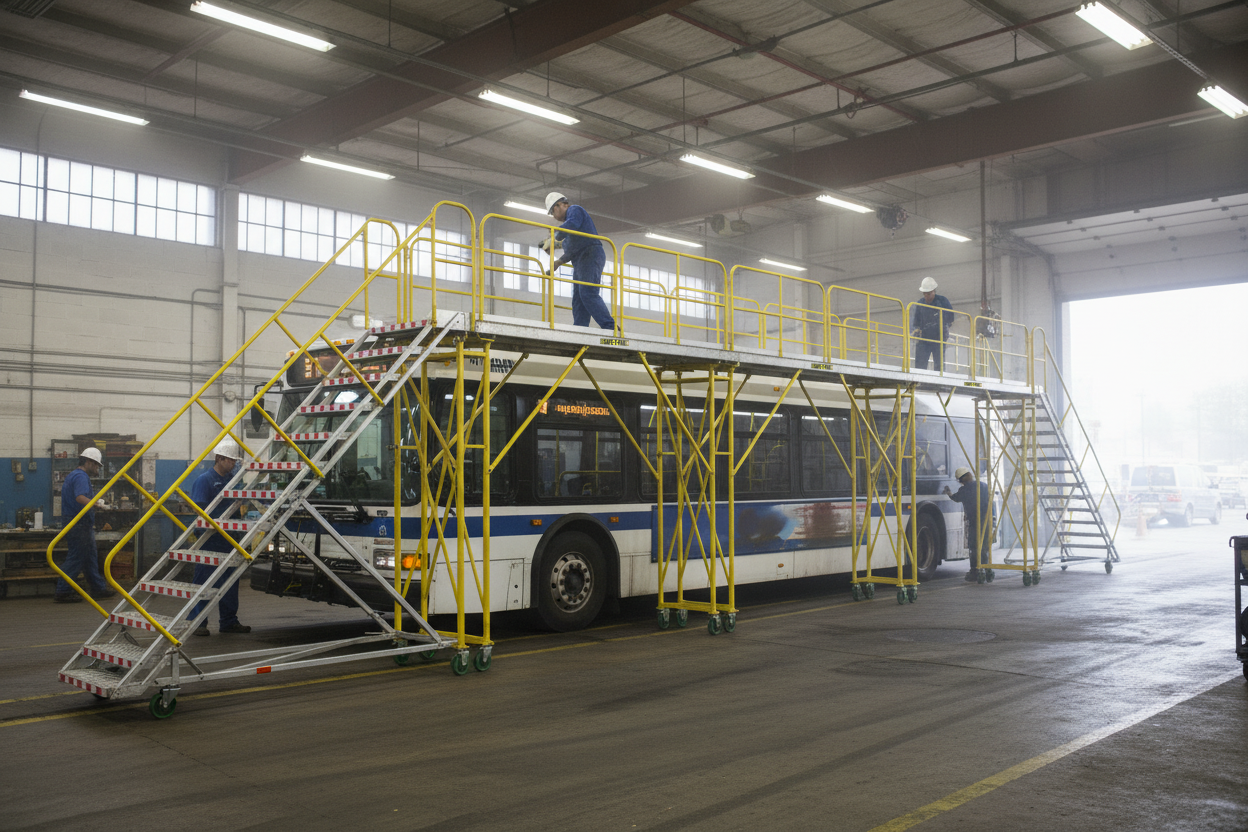
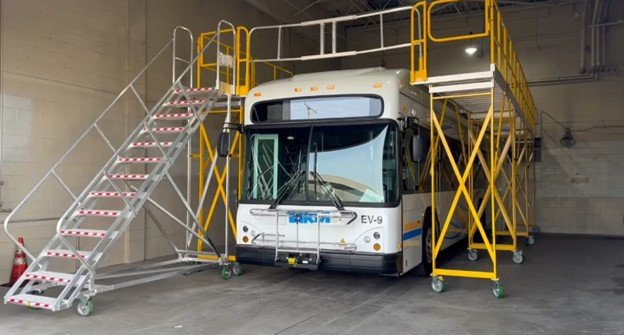
The bus drives straight under the platform. There is no clearance problem, even for operators expecting a 12 foot 5 inch or 12 foot 9 inch clear height.
The cross-rails clear rooftop battery packs and HVAC units. Roof mounted equipment on an electric bus stands proud of the roofline, and it varies by manufacturer and by model year. Fixed cross-rails set to one height either foul the equipment or leave a gap. Adjustable rails set to the vehicle in front of you.


No harness needed
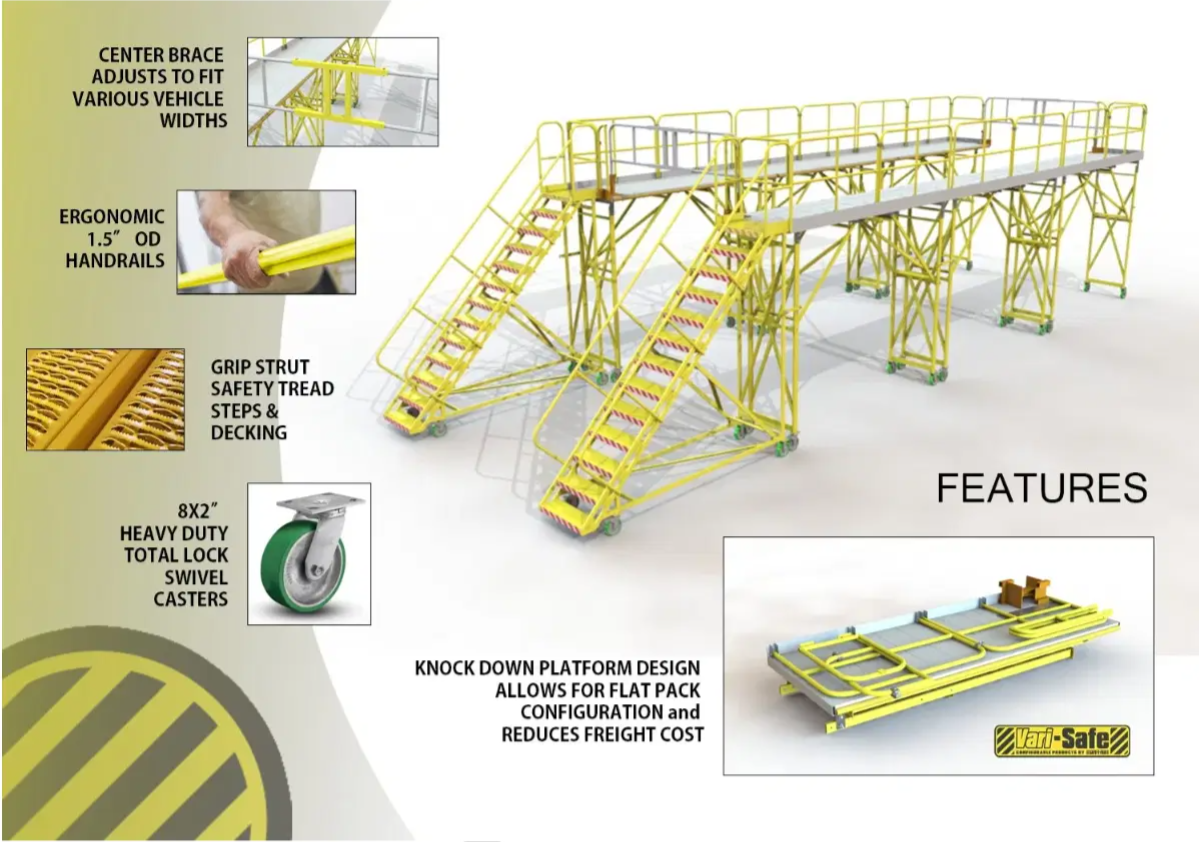
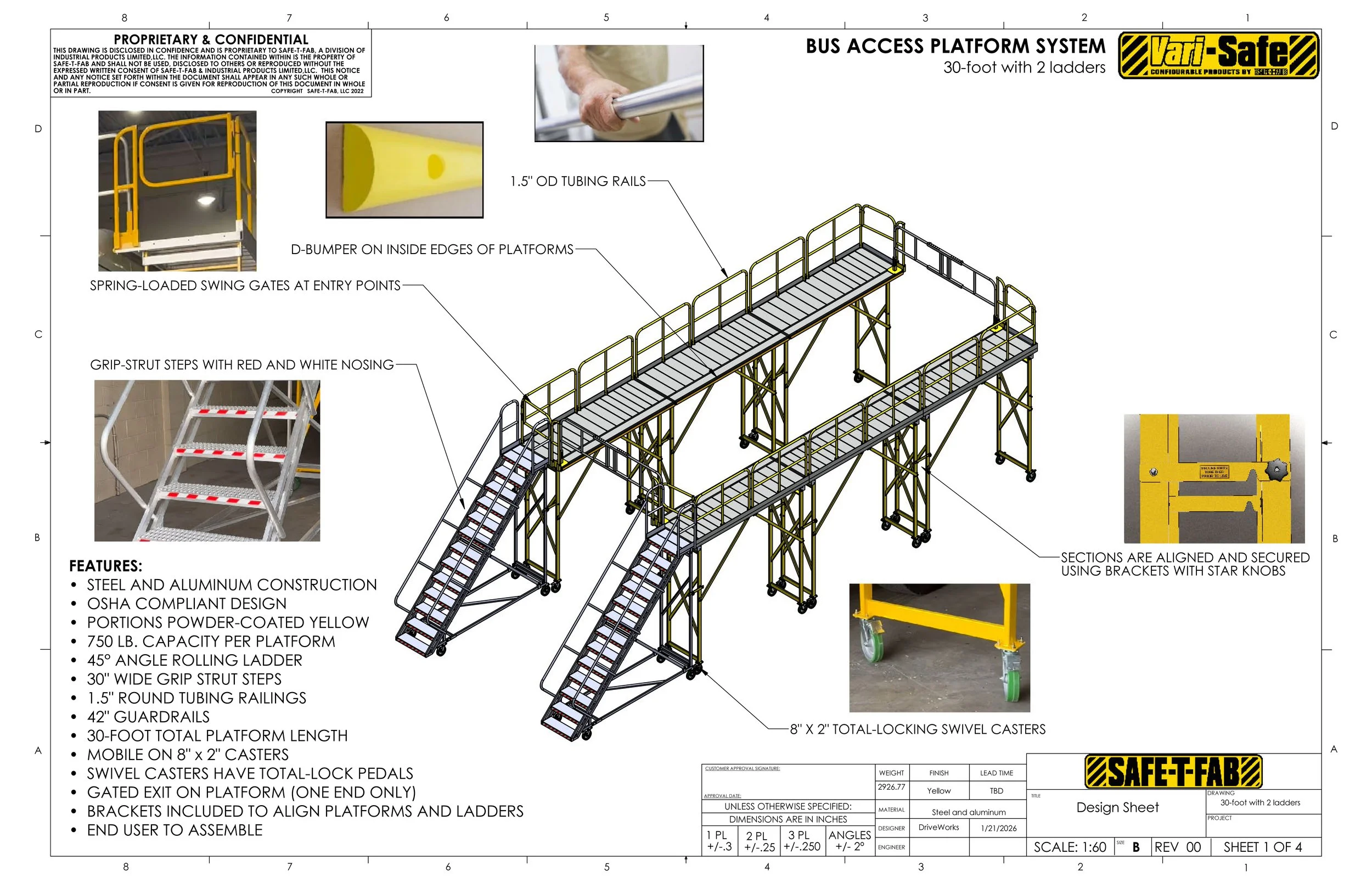
Full perimeter 42 inch guardrails run both sides and across the rear. Midrails and kickplate throughout. Adjustable cross-railings complete the enclosure over the vehicle. Spring loaded swing gates at every entry point.
That combination is passive fall protection. It works because the technician is inside a guarded envelope, not because they remembered to clip in.
The practical difference in an electric bus shop is real. Overhead anchor points are expensive to install and often impossible in a leased facility or a bay with a fixed ceiling. Harness systems require inspection, training, and a rescue plan. A technician working a high voltage disconnect while tethered to an overhead lanyard is fighting equipment instead of doing the job.
Take the harness out of the process and the work goes faster because nobody is managing it.
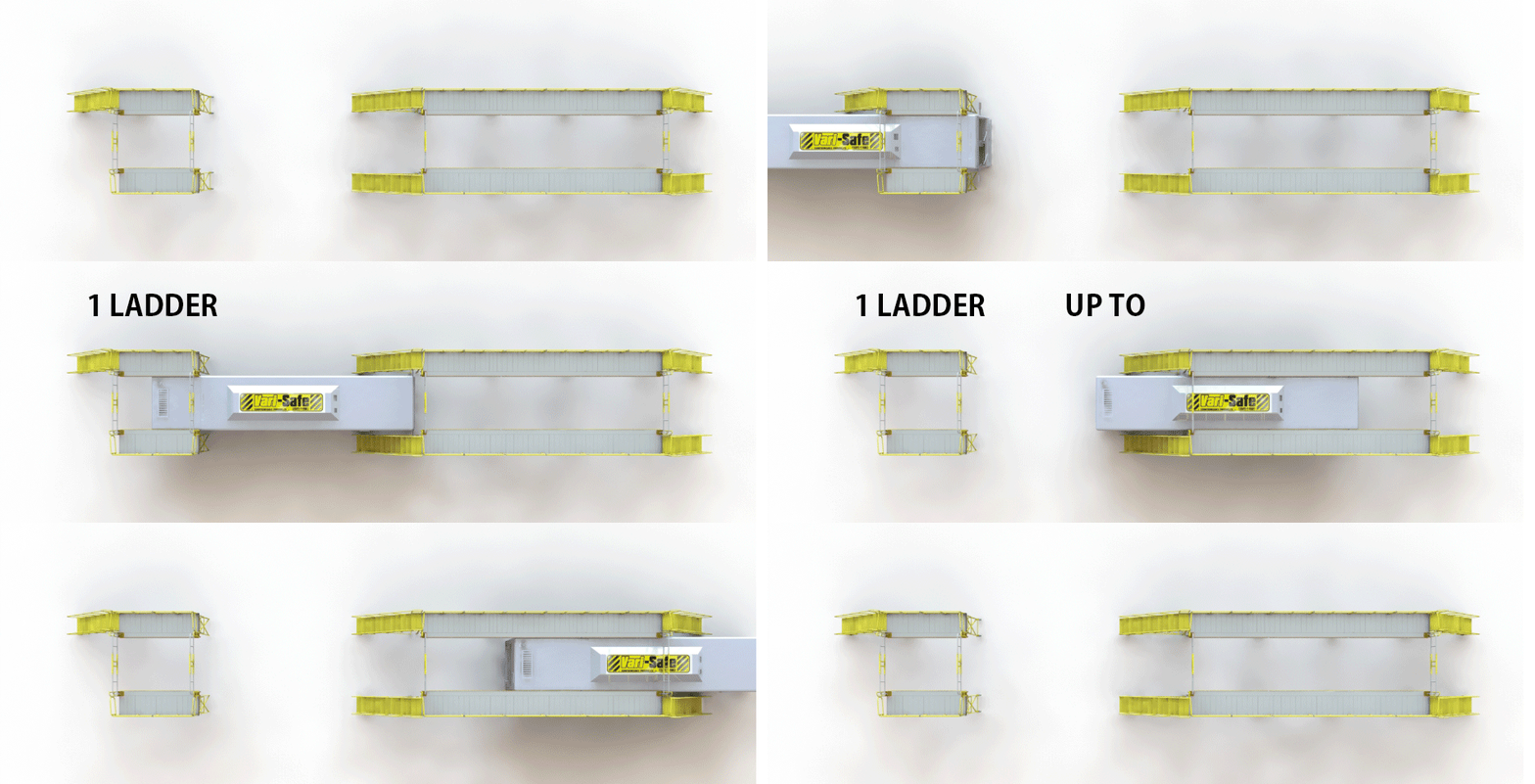
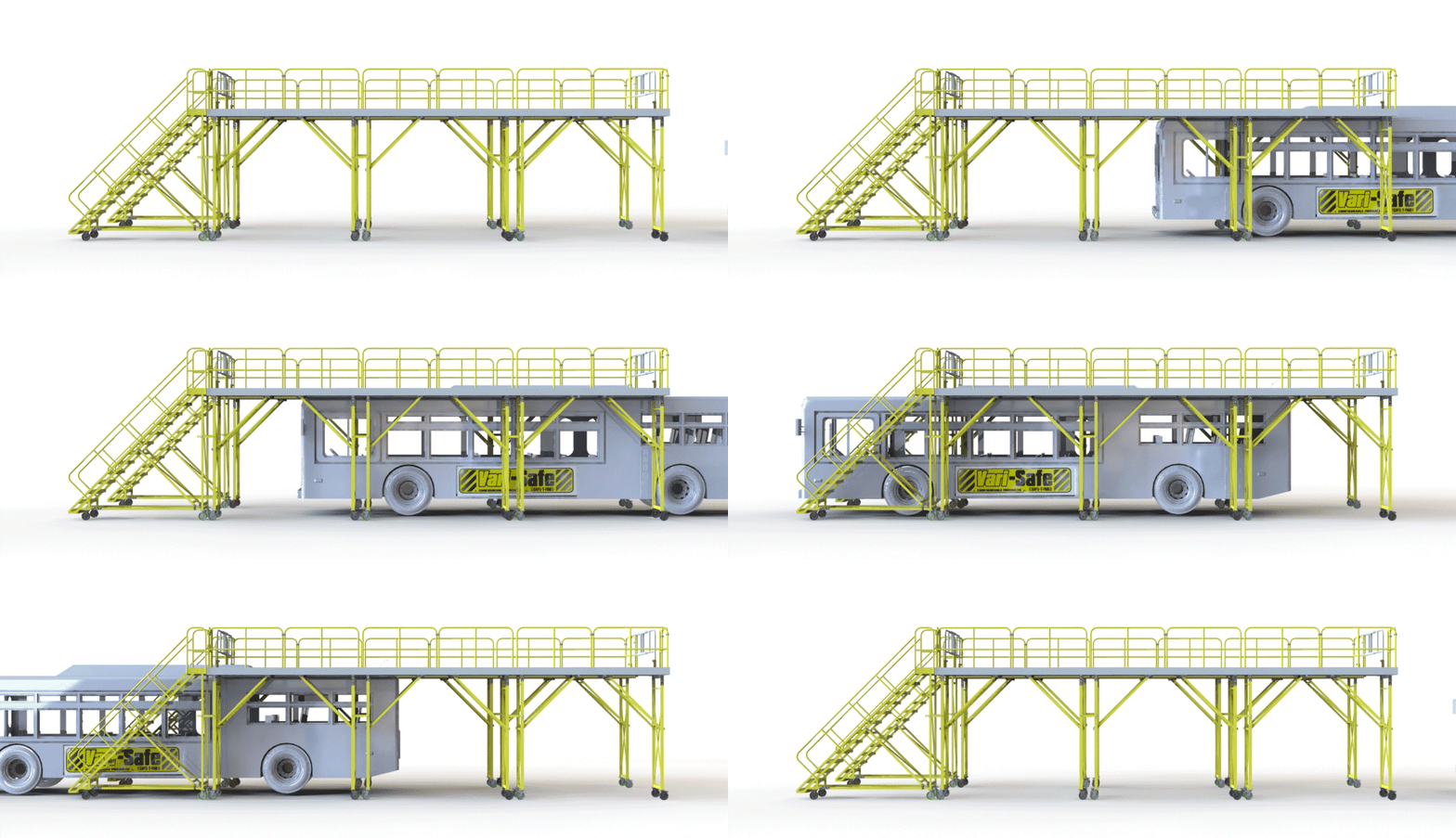
MULTIPLE CONFIGURATIONS
10 & 12 FOOT ($$) 20 to 24 FOOT ($$$) 30 to 60 FOOT ($$$$)
Configured for how electric fleets actually run
Transit and BRT
Standard 40 foot transit, articulated, and BRT vehicles. Configure the full run for a dedicated EV bay, or take a 10 or 12 foot section and reposition it down the length of the bus when budget matters more than cycle time.
Electric school bus depots
Sized for Type C and Type D bodies. Rooftop battery service, roof inspection, warning light and antenna work. Mobile sections reposition between bays as the depot workflow shifts.
Mixed fleets in transition
Almost nobody flips a fleet in one year. Diesel and electric share the same shop for a decade. The cross-rails adjust between vehicle types, so one platform serves both instead of forcing you to buy access equipment twice.
OEM and final assembly
In line rooftop battery and HVAC installation, paint, and quality inspection. Configurable lengths fit the assembly bay for transit OEMs, school bus manufacturers, and motor coach builders.
Dealer service and upfitters
Warranty work and customer spec upfit. The platform rolls between bays with no permanent installation and no facility modification.
Specifications
| Deck height | 120 inches standard, custom heights available |
|---|---|
| Length | 10 to 60 feet, built from 10 ft and 12 ft modular sections |
| Staircases | One to four, positioned to suit the bay |
| Capacity | 750 lb per platform section |
| Guardrails | 42 inch, with midrails and kickplate, full perimeter |
| Cross-railings | Height adjustable, spans the vehicle, clears rooftop equipment |
| Gates | Spring loaded swing gates at entry points |
| Stairs | 45 degree safety angle, 30 inch wide grip strut treads |
| Walking surface | Self draining serrated grip strut, all steps and decking |
| Casters | 8 in x 2 in dual locking swivel |
| Bus protection | Rubber D-bumpers on inside edges |
| Construction | Welded aluminum, high visibility safety yellow |
| Shipping | Knock down flat pack, assembles with standard hand tools |
| Compliance | OSHA 1910.28 and 1910.29 |
How we engineer it
Rated capacity is calculated at 250 pounds per person and engineered to a 3 to 1 safety factor target. That is the standard we hold on every stated capacity, and it is tighter than what the code requires of us.
Every platform ships with full customer approval drawings showing dimensions, materials, and assembly detail before anything is fabricated. PE stamped drawings are available when your facility or your insurer requires them.
We have been building custom access equipment for transit, school bus, and OEM facilities for years. The Vari-Safe line is that work productized into a configurable standard. When an application falls outside the standard we still build custom, and it is the same engineering team either way.
Electric bus roof access questions
How do you safely access the roof of an electric bus?
Use a platform that gives full perimeter guarded access across the top of the vehicle rather than a ladder or rolling stair that reaches one point. The Vari-Safe Electric Bus Access Platform positions a 120 inch deck along both sides of the bus with 42 inch guardrails and adjustable cross-railings spanning the roof, so a technician can walk the entire roofline inside a guarded envelope without a harness.
Will the platform clear the battery packs on the roof?
Yes. The cross-railings that span the vehicle are height adjustable and sit above deck height, so they clear roof mounted battery packs and HVAC units. Rooftop equipment heights vary between manufacturers and model years, and adjustable rails handle that variation without reconfiguring the platform.
Do technicians need to wear a fall arrest harness on this platform?
No. Full perimeter 42 inch guardrails with midrails and kickplate, combined with adjustable cross-railings over the vehicle and spring loaded swing gates at entry, provide passive fall protection under OSHA 1910.28 and 1910.29. No overhead anchor points are required.
What deck height do I need for an electric bus?
120 inches is standard and fits roughly 90 percent of transit and school bus applications. Because the cross-rails adjust above the deck, the same 120 inch deck serves vehicles with different roof heights. Custom deck heights are available when the application requires it.
Can one platform serve both diesel and electric buses?
Yes, and that is the normal case. The adjustable cross-railings reconfigure between vehicle types, so a shop running a mixed fleet through an electrification transition does not need two sets of access equipment.
How long is the platform, and can I add to it later?
Systems configure from 10 to 60 feet using 10 foot and 12 foot modular sections with one to four staircases. The design is modular, so sections can be added as the fleet grows or as additional bays convert to electric.
What is the working capacity?
750 lb per platform section, calculated at 250 pounds per person and engineered to a 3 to 1 safety factor target.
How long does it take to get one?
Roughly 10 weeks for a 12 foot single staircase system and roughly 14 weeks for a 60 foot system with four staircases. Configure online for a specific lead time on your configuration.
Does it ship assembled?
No. It ships knock down and flat pack, which cuts freight cost substantially. It assembles with standard hand tools using the included hardware. Turnkey assembly is available on request.
Where is it made?
Pittsburgh, Pennsylvania. SAFE-T-FAB is a division of Industrial Products Ltd. LLC.
Price your electric bus platform in minutes
Pick your length, staircase count, and section combination. The configurator returns drawings, pricing, and a lead time. Multi unit pricing and staggered shipments available for fleet wide rollouts.
CONFIGURE YOUR PLATFORMNeed something custom? Call 412-292-0745 or email design@safe-t-fab.com